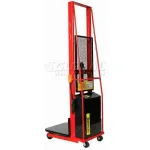
Platform Lift Trucks
Weight Capacity
Lowered Height
Raised Height
Brand
Type
Color
Price
Platform Lift Truck Comparison
| Lift Type | Weight Capacity | Raised Height | Lift Method | Best For | Use Cases |
| Foot Pump | 400–1,000 lbs | Up to 80 in | Hydraulic foot pedal | Frequent lifting with stable height control | Warehouses, assembly areas, industrial workspaces |
| Battery Powered | 125–2,000 lbs | Up to 80 in | Electric motor | Repetitive lifting, loading, and transporting | Distribution centers, packaging, staging zones |
| Folding Battery Powered | 350 lbs | 48 in | Electric motor | Portable lifting with minimal storage footprint | Facility maintenance, mobile teams, tight spaces |
| Office & Lab | 220–330 lbs | 59–67 in | Manual or battery-powered | Controlled lifts in sensitive spaces | Labs, medical offices, IT departments |
| Hand Winch | Up to 1,000 lbs | Up to 80 in | Manual hand crank | Moderate lifting with precise height control | Backrooms, workshops, shipping areas |
Frequently Asked Questions
Have a Question? Our experts might already have the answers.
Which type of lift truck is best for office or lab environments?
Office & lab lift trucks are engineered for compact, sensitive spaces. Their slim design, non-marking wheels, and quiet operation help protect equipment and finishes while supporting precise, controlled lifts.
How much weight can platform lift trucks safely handle?
Capacities range from about 125 to 2,000 lbs., depending on the model. Manual units support lighter loads, while powered and hydraulic versions handle heavier tasks. Always follow the manufacturer’s rated capacity to maintain stability and avoid damage or injury.
What OSHA guidance applies to platform lift trucks?
According to OSHA, operators should follow these key practices to maintain control and prevent accidents when using platform lift trucks:
- Select the right lift truck type for the weight, size, and shape of the load.
- Center the load close to the mast to improve stability and reduce tipping risk.
- Keep the platform lowered while moving the truck to maintain a low center of gravity.
- Never counterbalance an overloaded lift by adding weight to the rear.
What surface types are suitable for each lift truck design?
Most platform lift trucks use polyurethane or rubber non-marking wheels, making them ideal for sealed concrete, tile, and other smooth indoor surfaces. For rougher or uneven areas, look for models with reinforced frames and larger wheel diameters or phenolic load wheels to improve balance and reduce rolling resistance.
How should platform lift trucks be maintained for long-term use?
Inspect wheels, casters, and brakes regularly, and clean and lubricate lift mechanisms according to manufacturer guidelines. Charge and store battery-powered units in a dry, temperate area, and confirm that safety locks and brakes engage fully before operation.
Platform Lift Truck Types
For more guidance, check out The Ultimate Guide to Carts, Trucks, and Pallet Jacks or browse related categories like platform trucks and lift tables.