Sales: 1.888.978.7759
en-US
US - English
English
selectedCheck


Cable Protectors & Cord Covers

Cable management solutions help maintain a safe and organized workspace. Cable ties, wiring troughs, and strain relief grips ensure cables are properly secured and protected. Cable protectors help prevent trip hazards, equipment damage, and cable wear and tear, promoting safety and prolonging cable life.
184 Results

Global Industrial™ Cable Protectors

Global Industrial™ Cable Protectors
Global Industrial cable protectors provide a secure and effective way to protect cables, wiring, and hoses from vehicle and pedestrian traffic. Our floor cable protectors are available in vibrant colors for high-visibility to reduce tripping, and feature a non-slip texture for optimal safety. They are ideal in warehouses, storerooms, and more.
CompareImageLengthWidthNumber of ChannelsColorTypeCapacityModel #Price
Global Industrial™ 5-Channel Industrial Cable Protector, 32,600 lbs. Capacity
35-7/16 in
19-11/16 in
5
Yellow
Lay In Cable Protector
32,600 lbs/Tire
Ships Same Day
WB670622
$249.95
Global Industrial™ Molded Rubber Cable Protector, Black
39 in
5 in
1
Black
Drop Over Cable Protector
-
Ships Same Day
WB708184BK
as low as

$38.95

Save $1.00 (3%)
Global Industrial™ 2-Channel Heavy-Duty Cable Protector, 16,000 lbs. Capacity
39 in
10 in
2
Yellow
Lay In Cable Protector
16,000 lbs/Tire
Ships Same Day
WB670615
$99.95
Global Industrial™ 1-Channel Drop Over Cable Protector, 18,000 lbs. Capacity, Black
39-3/8
11-13/16 in
1
Black
Drop Over Cable Protector
18,000 lbs/Tire
Ships Same Day
WB670625
as low as

$105.95

Save $4.00 (4%)
Global Industrial™ 2-Channel Industrial Cable Protector, 24,000 lbs. Capacity
39 in
10 in
2
Yellow
Lay In Cable Protector
24,000 lbs/Tire
Ships Same Day
WB670616
$129.95
Global Industrial™ 5-Channel Heavy-Duty Cable Protector, 22,000 lbs. Capacity
35-7/16 in
19-11/16 in
5
Yellow
Lay In Cable Protector
22,000 lbs/Tire
Ships Same Day
WB670621
$199.95
Global Industrial™ 3-Channel Heavy-Duty Cable Protector, 22,000 lbs. Capacity
35-7/16 in
19-11/16 in
3
Yellow
Lay In Cable Protector
22,000 lbs/Tire
Ships Same Day
WB670618
$199.95
Global Industrial™ 1-Channel Drop Over Cable Protector, 18,000 lbs. Capacity, Yellow
39-3/8
11-13/16 in
1
Yellow
Drop Over Cable Protector
18,000 lbs/Tire
Ships Same Day
WB670624
as low as

$105.95

Save $4.00 (4%)
End Cap for Global Industrial™ 5-Channel Industrial Cable Protectors
19-11/16
19-11/16 in
5
Black
End Cap
-
Ships Same Day
WB670623
$63.95
Global Industrial™ 3-Channel Industrial Cable Protector, 32,600 lbs. Capacity
35-7/16 in
19-11/16 in
3
Yellow
Lay In Cable Protector
32,600 lbs/Tire
Ships Same Day
WB670619
$249.95
Showing 1-10 of 11 results

Checkers® Cable Protectors

Checkers® Cable Protectors
Protect your cables and cords from foot and vehicle traffic with Checkers® cable protectors. They feature a heavy-duty rubber construction, and modular interlocking design for easy setup. These floor cable protectors are available in a variety or high-visibility colors to reduce trips, making them ideal for industrial and commercial applications.
Showing 1-10 of 98 results

Ultra-Sidewinder® Cable Protector

Ultra-Sidewinder® Cable Protector
The Ultra-Sidewinder® cable protector offers maximum protection for cables and hoses from heavy impact and abrasion. They feature a flexible design allowing you to protect cables around curves, corners, and S-curves. These floor cable protectors are made utilizing a modular design allowing you to reconfigure and make repairs using the simple "snap in" feature.
Showing 1-10 of 18 results

Tire Conversion Technologies Cable Protectors

Tire Conversion Technologies Cable Protectors
Tire Conversion Technologies cable protectors are the perfect solution for temporary events or permant work sites. These heavy-duty cable protectors are ideal for construction sites or industrial environments where there is heavy vehicle traffic. They are available in a variety of sizes and vibrant colors for high-visibilty.

Vestil Cable & Hose Bridges

Vestil Cable & Hose Bridges
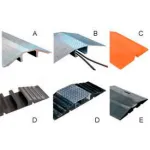
Vestil cable and hose bridges protect cables and provide safe passage for pedestrians and rolling traffic over cables and hoses. They are made of heavy duty aluminum, and feature serrations on top for added traction. These cable protectors are available in a variety of sizes and weight capacities to best suit your needs.
Showing 1-10 of 43 results

WASP® ADA Access Ramp Kits

WASP® ADA Access Ramp Kits
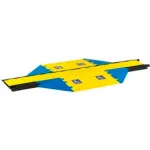
WASP® ADA access ramp kits are great for protecting cords and cables while also allowing wheelchair users to easily move over barriers. They are made of highly durable materials to withstand foot and wheelchair traffic in highly trafficked areas. These cable protecting ADA access ramps are available in high-visibility colors to prevent trips.
Wiremold Cord Covers

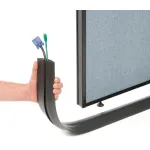
Wiremold Cord Covers

Cable Protectors & Cord Covers for Safer Cable & Hose Routing

Cable protectors and cord covers help shield power cords, electrical cables, wires, and hoses where they cross floors, walkways, work areas, or vehicle routes. They can help protect lines from foot traffic, carts, equipment, and vehicles while reducing hazards associated with exposed cables in warehouses, manufacturing facilities, construction sites, offices, events, and other commercial or industrial environments.

Options include lay-in, drop-over, low-profile, flexible, and heavy-duty cable protectors, as well as cable and hose bridges and access ramp systems. Choosing the right configuration depends on the size and number of cables or hoses, traffic type, required load capacity, installation environment, and how frequently the routing needs to change.

What to Consider When Choosing Cable Protectors & Cord Covers

Consider how and where the protector will be used before selecting a design:

  • Cable or hose dimensions: Measure the width and height of the cables or hoses and compare them with the protector's channel dimensions to confirm proper fit.
  • Number of channels: Single-channel designs may accommodate one line, while multi-channel protectors can separate several cables or hoses within the same crossing.
  • Traffic type: Determine whether the area is used by pedestrians, carts, pallet trucks, forklifts, vehicles, or a combination of traffic.
  • Load capacity: For equipment or vehicle crossings, verify that the protector's stated capacity and intended application are appropriate for the expected traffic.
  • Installation style: Lay-in models provide channels for placing cables inside the protector, while drop-over models are positioned over existing lines and can simplify temporary setups.
  • Crossing height: Low-profile designs or compatible access ramps may provide a more gradual transition where pedestrians or wheeled traffic regularly cross the area.
  • Route configuration: Straight sections work for direct runs, while flexible or modular systems can accommodate curves, corners, or changing layouts.
  • Environment: Consider indoor or outdoor use and potential exposure to moisture, temperature changes, oils, chemicals, or other site conditions.

Always check manufacturer specifications for channel dimensions, load capacity, installation requirements, environmental limitations, and intended use.

Compare Cable Protector Types

Different cable protector designs address different routing and traffic requirements.

Type Common Applications Key Considerations
Lay-In Cable Protectors Industrial areas, worksites, multi-cable or hose crossings Channel dimensions, number of channels, cover design, traffic type, and load capacity
Drop-Over Cable Protectors Temporary installations and frequently changing cable layouts Cable dimensions, protector size, traffic type, and load capacity
Low-Profile Cable Protectors Walkways and areas with pedestrian, cart, or other rolling traffic Crossing height, channel capacity, stability, and intended traffic
Flexible Cable Protectors Curved routes, corners, and layouts that may require reconfiguration Bend capability, channel dimensions, modular compatibility, and traffic requirements
Cable & Hose Bridges Larger cables, hoses, and lines crossing active work areas Opening dimensions, overall crossing height, traction, and load requirements
Access Ramp Systems Crossings where a more gradual transition is needed for wheeled traffic Compatibility with the cable protector system, overall width, slope, and accessibility requirements

The product type alone does not determine whether a cable protector is suitable for a particular application. Verify the specifications of the individual product before selecting it for pedestrian, equipment, or vehicle traffic.

Cable Protectors for Pedestrian, Cart & Vehicle Traffic

Traffic type is one of the most important factors when selecting a cable protector.

Pedestrian areas may benefit from visible, lower-profile designs that help minimize abrupt changes in walking surfaces. Cart and rolling-traffic areas require additional consideration of crossing height, stability, ramp configuration, and the equipment that will pass over the protector.

Industrial and vehicle traffic may require heavy-duty cable protectors designed for the expected loads. Applications involving forklifts, pallet trucks, service vehicles, or other equipment should use protectors with manufacturer specifications appropriate for that traffic.

Do not assume that a cable protector designed for pedestrian traffic can support vehicles or material handling equipment. Load capacities and intended applications can vary substantially between products.

How to Determine Cable Protector Size & Number of Channels

Start by measuring the cables or hoses that need to be protected. Compare their dimensions with the usable width and height of the protector's channels rather than selecting a protector based only on its overall dimensions.

The number of channels should correspond to the lines that need to cross the area. A single-channel protector may be sufficient for one cord or hose, while multi-channel designs can organize several power, data, communication, or hose lines within one crossing.

Consider future routing needs as well. If additional cables are likely to be added, available channel capacity may be useful, provided the overall protector size and configuration remain appropriate for the application.

Lay-In vs. Drop-Over Cable Protectors

The primary difference between lay-in and drop-over cable protectors is how the cables or hoses are installed.

Lay-in cable protectors allow lines to be placed into designated channels, typically beneath a cover. They can help separate multiple lines and are available in configurations designed for different traffic and load requirements.

Drop-over cable protectors are positioned over cables or cords that are already in place. This can make them convenient for temporary applications, events, maintenance work, or environments where cable layouts change frequently.

Neither design is inherently better for every application. Selection should be based on cable dimensions, traffic, required protection, installation frequency, and the specifications of the individual protector.

Frequently Asked Questions

Have a Question? Our experts might already have the answers.

What is a cable protector used for?

A cable protector covers and shields cables, cords, wires, or hoses where they cross floors, walkways, work areas, or vehicle routes. It can help protect the lines from traffic while reducing hazards associated with exposed cables.

What is the difference between a cable protector and a cord cover?

Both help protect and organize exposed lines. Cord covers are often used with smaller cords and lighter-traffic applications, while cable protectors can include multi-channel and heavy-duty systems designed for larger cables, hoses, equipment, or vehicle traffic.

What is the difference between lay-in and drop-over cable protectors?

Lay-in protectors allow cables or hoses to be placed into channels, often beneath a cover. Drop-over protectors are positioned over lines already in place, which can make them useful for temporary installations or cable layouts that change frequently.

Can vehicles drive over cable protectors?

Some cable protectors are designed for vehicle or industrial traffic, but load capacities and intended uses vary. Check the manufacturer's specifications before allowing vehicles, forklifts, pallet trucks, or other equipment to cross a cable protector.

How do I choose the right size cable protector?

Measure the width and height of the cables or hoses and compare them with the protector's channel dimensions. Also consider the number of lines, traffic type, required load capacity, crossing height, installation method, and environment.

How many channels should a cable protector have?

Choose enough channels to accommodate the cables or hoses that need protection without exceeding the specified channel dimensions. Multi-channel protectors can help separate several power, data, communication, or hose lines within one crossing.

Can cable protectors be used outdoors?

Some cable protectors are designed for outdoor and demanding worksite environments, but suitability varies by product. Check manufacturer specifications for materials, temperature range, exposure limitations, installation requirements, and intended environment.

Are cable protectors suitable for wheelchairs and carts?

Some cable protection systems offer low-profile designs or compatible access ramps for wheelchairs, carts, and other wheeled traffic. Where accessibility is required, verify that the complete system is designed for the applicable accessibility requirements.