Key Takeaways:
- A commercial floor scrubber improves cleaning consistency, productivity, and floor safety in large facilities.
- Growing square footage, rising labor demands, and persistent floor buildup are common signs it may be time to upgrade.
- Ride-on equipment supports faster drying times and more efficient commercial floor scrubbing in high-traffic environments.
- The new 2-in-1 sweeping and scrubbing technology offered by Global Industrial helps reduce downtime, machine damage, and labor costs.
Clean floors are critical to maintaining safe and efficient commercial and industrial operations. In warehouses, manufacturing plants, retail environments, healthcare facilities, and schools, floors experience constant foot traffic, rolling equipment, spills, dust, and debris accumulation throughout the day.
As facilities grow and cleaning demands increase, traditional mopping methods or smaller walk-behind machines may struggle to keep pace. Inconsistent cleaning can create slip hazards, contribute to equipment wear, increase labor demands, and negatively impact overall facility appearance.
Upgrading to a ride-on floor cleaning machine can help facilities maintain cleaner floors with greater consistency while reducing the time and labor required to cover large areas.
When cleaning demands begin outgrowing existing equipment or methods, a few warning signs may start appearing across productivity, safety, and operational performance. Here are six common indicators that it may be time to upgrade.
1. Your Facility Takes Too Long to Clean
One of the clearest signs a facility needs a ride-on scrubber is when floor cleaning consumes excessive labor hours or disrupts operations.
Large facilities often require multiple cleaning passes each day to manage dirt, dust, pallet debris, tire marks, or spills. If cleaning crews struggle to complete tasks within operational windows or if areas are regularly skipped due to time constraints, it may indicate that current equipment is undersized for the environment. In larger facilities, relying heavily on manual or walk-behind scrubbers can also increase operator fatigue during long cleaning cycles, particularly when covering expansive floor areas multiple times per shift.
Ride-on machines improve productivity by allowing operators to clean larger areas more quickly without sacrificing cleaning consistency. In high-traffic facilities, this can significantly reduce labor requirements while improving overall cleanliness standards.
However, speed alone does not solve every cleaning challenge. Even facilities completing cleaning routines on schedule may still struggle with other issues.
2. Floors Stay Dirty Even After Cleaning
Persistent residue, dust buildup, or streaking after cleaning may signal that existing equipment is no longer effective for the environment.
Facilities with forklift traffic, manufacturing debris, packaging dust, or high pedestrian activity often require more aggressive and consistent cleaning performance than basic equipment can provide. Traditional scrubbers may also struggle when debris accumulates before scrubbing begins, leading to clogged systems or uneven results.
Additionally, not every facility has the same cleaning requirements. A warehouse managing pallet debris and forklift traffic has very different needs than a school, healthcare facility, or retail environment. Global Industrial offers a wide selection of ride-on floor scrubbers designed for different facility sizes, traffic levels, and cleaning challenges.
Choosing the right machine often depends on factors such as square footage, debris type, floor conditions, and cleaning frequency. To simplify the selection process, use our Floor Scrubber Calculator, which can help you estimate the right equipment size based on your cleaning needs.
For large warehouses and industrial environments where heavy debris, high traffic, and productivity demands create additional challenges, newer cleaning technologies are beginning to change expectations.
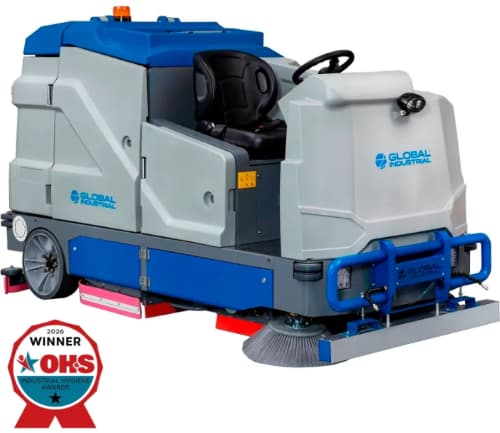
The combo unit recently received an OH&S Industrial Hygiene Award in the Warehouse/Distribution category, recognizing its focus on facility safety, operational efficiency, and worker health.
3. Slip-and-Fall Risks Are Increasing
Floor cleanliness directly impacts workplace safety.
Dust, liquid residue, metal debris, and excess moisture can increase the likelihood of slips, trips, and falls, especially in facilities with frequent vehicle or pedestrian traffic. Poorly maintained floors may also contribute to forklift traction issues and equipment instability.
Modern facility floor cleaning solutions are designed not only for appearance, but also for safety performance. Faster drying systems, debris management features, and dust suppression technology help reduce common hazards associated with industrial floor conditions.
For example, the Global Industrial™ 2-in-1 Sweeper/Scrubber includes:
- A magnetic debris bar that captures metal fragments before they damage equipment or create hazards
- A dust-suppression misting system that reduces airborne particles during sweeping
- A blue front safety light that improves visibility in busy aisles and warehouse environments
- A dead-man seat switch that automatically stops the machine if the operator leaves the seat
These features help industrial facilities improve workplace safety while maintaining productivity.
4. Your Cleaning Equipment Requires Frequent Repairs
Frequent scrubber downtime is often a sign that equipment is being pushed beyond its intended capacity.
In industrial environments, debris such as nails, shrink wrap, cardboard fragments, staples, and pallet splinters can damage traditional scrubbers or clog internal components. Repeated maintenance interruptions increase repair costs while reducing cleaning productivity.
A modern ride-on floor cleaning machine designed for industrial use can help reduce these issues by improving debris management and simplifying operation. Combining sweeping and scrubbing into one process also eliminates the need for separate cleaning passes, reducing machine wear and overall cleaning time by half.
5. Your Facility Has Expanded or Increased Throughput
As facilities grow, cleaning requirements change.
Additional warehouse aisles, expanded production areas, larger retail footprints, or increased shipping activity all create more floor area to maintain. Higher throughput also means more tire traffic, more debris, and more frequent cleaning cycles.
The table below highlights common indicators that facilities may be ready to upgrade to a ride-on scrubber:
|
Facility Condition |
Potential Challenge |
Ride-On Scrubber Benefit |
|
Large square footage |
Long cleaning times |
Faster area coverage |
|
Frequent forklift traffic |
Tire marks and debris buildup |
Improved cleaning consistency |
|
Multiple daily cleaning cycles |
Increased labor demands |
Greater productivity |
|
High pedestrian traffic |
Slip-and-fall risk |
Faster drying and cleaner floors |
|
Repeated equipment repairs |
Downtime and maintenance costs |
Better debris management |
6. You Need More Consistent Cleaning Across Shifts
Facilities operating across multiple shifts often struggle to maintain consistent cleaning standards. Cleaning quality may vary depending on staffing levels, training, or time limitations.
Modern ride-on scrubbers help standardize cleaning performance while simplifying operation for users with varying experience levels. Some newer systems are designed to have advanced safety features; due to their ease of use, they do not require specialized operator certification. This helps reduce training demands while improving consistency.
This is particularly valuable in warehouses, logistics facilities, and manufacturing environments where cleaning responsibilities may shift between teams throughout the day.
How Ride-On Floor Scrubbers Support Long-Term Operational Performance
Investing in the best ride-on floor scrubber is not simply about cleaning faster. It is about improving operational reliability, safety, and long-term facility performance.
Modern machines support:
- Cleaner, safer floors
- Reduced labor time
- Lower maintenance interruptions
- Better air quality
- Improved operator visibility
- More consistent cleaning results
For facilities managing large footprints or demanding cleaning environments, upgrading floor-care equipment can help reduce operational friction while supporting a cleaner and safer workplace.
Consider Water Availability and Runtime Requirements
Large facilities such as warehouses, schools, stadiums, airports, and convention centers often have limited access to refill and dump stations. The Global Industrial™ Recirculating Water Auto Ride-On Floor Scrubber addresses this challenge with innovative water recirculation technology that continuously filters and reuses the cleaning solution during operation.
This breakthrough design allows operators to clean for up to four hours without stopping to refill or empty tanks, helping reduce downtime, conserve water, and significantly improve productivity across large facilities.
Choosing the Right Commercial Floor Scrubber
The right commercial floor scrubber depends on facility size, traffic patterns, debris type, and cleaning frequency.
Facilities should evaluate:
|
Consideration |
Why It Matters |
|
Cleaning area size |
Determines productivity requirements |
|
Debris type |
Impacts sweeping and filtration needs |
|
Drying speed |
Affects slip risk and operational downtime |
|
Operator visibility |
Supports safer operation in busy areas |
|
Maintenance requirements |
Influences uptime and repair costs |
|
Multi-function capability |
Reduces labor and cleaning passes |
Facilities with heavy debris, high throughput, or large cleaning zones often benefit most from integrated sweeping and scrubbing systems that improve efficiency while reducing wear on equipment.
Don’t Overlook Replacement Parts and Floor Care Consumables
Choosing the right commercial floor scrubber also means planning for the ongoing maintenance items that keep equipment operating efficiently over time.
Scrub brushes, floor pads, squeegees, filters, cleaning solutions, and other machine consumables all play a direct role in cleaning performance, drying effectiveness, and overall machine lifespan. Worn brushes or damaged squeegees, for example, can leave behind residue or excess moisture that reduces cleaning consistency and increases slip risk.
Facilities operating in high-traffic or debris-heavy environments may need to replace certain consumables more frequently depending on usage levels, floor conditions, and cleaning schedules. Maintaining access to commonly used replacement parts can help reduce downtime and prevent interruptions during critical cleaning cycles.
When evaluating a ride on floor cleaning machine, facilities should also consider:
- Availability of replacement parts
- Ease of maintenance
- Frequency of consumable replacement
- Compatibility with commonly used pads and brushes
- Service support and long-term operating costs
A proactive maintenance strategy helps ensure floor care equipment continues delivering consistent performance while extending the life of the machine itself.
Keep Your Floor Scrubber Performing at Its Best
Explore floor care consumables, replacement parts, cleaning chemicals, pads, brushes, and more to help support long-term equipment performance and reduce downtime.
Frequently Asked Questions
Why are my floors still dirty even after using a scrubber?
Persistent dirt or residue may indicate that debris is not being removed before scrubbing begins, particularly in industrial environments with dust, cardboard fragments, pallet debris, or metal particles. However, cleaning performance can also be affected by using the wrong scrubber pads, brushes, or cleaning accessories for the floor type and soil conditions.
Worn pads, incorrect brush selection, damaged squeegees, or improperly matched cleaning solutions can all reduce cleaning effectiveness and leave behind residue or excess moisture. Integrated sweeping and scrubbing systems, combined with properly maintained consumables and accessories, help improve cleaning consistency across demanding environments.
How do I justify the cost of a ride-on floor scrubber to leadership?
Facility managers often justify the investment by comparing labor hours, cleaning consistency, maintenance costs, and downtime against current cleaning processes. In many large facilities, reducing even one additional cleaning pass per shift can create meaningful labor savings over time. Machines that combine sweeping and scrubbing into a single workflow can cut cleaning time in half, and can also help reduce repair costs caused by debris entering traditional scrubbers.
Why does my floor scrubber keep clogging or breaking down?
Industrial environments often contain pallet debris, cardboard fragments, dust, staples, nails, and shrink wrap that traditional scrubbers are not designed to manage efficiently. When debris is not removed before scrubbing, it can clog recovery systems, damage components, and increase maintenance downtime. Facilities with recurring repair issues may benefit from integrated sweeping and scrubbing systems with magnetic bars designed specifically for debris-heavy environments.
How can we clean large warehouse aisles without disrupting forklift traffic?
Cleaning during active operations is a common challenge in warehouses and logistics facilities. Ride-on scrubbers with faster drying systems, improved visibility features, and efficient coverage rates help reduce disruption during cleaning cycles. Some facilities also stagger cleaning schedules or focus on high-traffic aisles during lower-volume operational windows to minimize congestion.
What features matter most when choosing a commercial floor scrubber for a warehouse?
Warehouse environments often require top-rated floor cleaning machines and performance. Features such as debris management, dust suppression, operator visibility, drying speed, battery runtime, and ease of operation can significantly impact productivity and safety. Facilities with heavy forklift traffic or industrial debris may also prioritize machines with integrated sweeping capability and enhanced safety features.
How do I best maintain my floor cleaning machine?
Routine maintenance is essential for cleaning performance, extending equipment life, and reducing unexpected downtime. Facilities should regularly inspect and replace consumables such as scrub pads, brushes, squeegees, and filters while also monitoring batteries, solution tanks, and debris-collection systems for buildup or wear.
Many manufacturers also recommend following scheduled preventive maintenance intervals to help identify issues before they affect operation. For additional support, Global Industrial offers floor scrubber self-service resources as well as access to service and maintenance support through Triad Service Center.
The information contained in this article is for informational, educational, and promotional purposes only and is based on information available as of the initial date of publication. It is the reader’s responsibility to ensure compliance with all applicable laws, rules, codes and regulations. If there is any question or doubt in regard to any element contained in this article, please consult a licensed professional. Under no circumstances will Global Industrial® be liable for any loss or damage caused by your reliance on this article.