Key Takeaways:
- Centralized charging cabinets keep tools, batteries, and devices organized, secure, and fully charged.
- They help reduce downtime, workplace clutter, and time spent searching for equipment.
- Locking doors protect valuable assets from theft and unauthorized access.
- Key features include steel construction, ventilation, integrated power strips, adjustable shelves, and cable management.
- Ideal for manufacturing, warehouses, maintenance, schools and vocational programs, utilities, and construction sites.
- A dedicated charging station improves productivity, accountability, safety, and overall workplace efficiency.
The Growing Need for Organized Charging Solutions
Cordless tools, rechargeable batteries, tablets, barcode scanners, radios, and other mobile devices have become essential across manufacturing facilities, warehouses, maintenance departments, schools and vocational programs, utilities, and construction sites. While these technologies improve productivity, they also create a common challenge—keeping equipment charged, organized, and secure.
Without a designated charging and storage area, batteries, tools, and mobile devices often end up scattered throughout a facility, stored on workbenches, or connected to overloaded power strips. The result can include unnecessary downtime, misplaced equipment, cluttered workspaces, and increased safety risks.
What Is a Charging Cabinet?
A charging cabinet is a purpose-built storage solution that combines secure organization with convenient charging capabilities for cordless tools, batteries, barcode scanners, radios, tablets, and other rechargeable equipment. By consolidating both storage and charging into a single location, these cabinets help facilities maintain better control of shared equipment while keeping devices powered and ready for use.
Designed for industrial and commercial environments, charging cabinets often incorporate integrated power distribution, ventilation, and security features that support efficient equipment management and reduce workplace clutter.
Benefits of a Centralized Charging Cabinet
A dedicated charging cabinet helps organizations improve both efficiency and workplace organization by providing one secure location to charge and store equipment.
Key benefits include:
- Keeps tools, batteries, and devices organized
- Reduces clutter around workstations
- Protects valuable equipment from unauthorized access
- Helps employees quickly locate charged equipment
- Improves accountability for shared tools
- Supports a cleaner and more efficient workspace
When employees know exactly where equipment belongs, less time is spent searching for missing tools and more time is spent completing productive work.
Features to Look for in a Charging Cabinet
Not all charging solutions are designed for demanding industrial environments. When selecting a charging cabinet, consider features that improve durability, organization, and ease of use.
Important features include:
- Heavy-duty, all-welded steel construction
- Secure keyed locking doors
- Ventilated doors help prevent interior heat buildup during charging
- Integrated power strips for convenient charging without sacrificing security
- Adjustable shelves to accommodate tools and devices of different sizes
- Cable management to keep charging cords organized
- Mobile and stationary configurations to fit various workspaces
These features help protect equipment while creating a more organized and efficient charging station.
Durham Manufacturing Tool Charging Cabinets
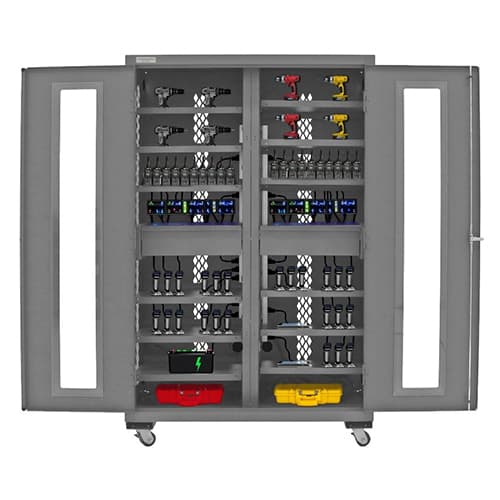
Durham Manufacturing Tool Charging Cabinets provide a centralized solution for storing, securing, and managing rechargeable equipment in demanding industrial environments. Designed for manufacturing facilities, warehouses, maintenance operations, utility fleets, and construction sites, these cabinets help keep essential equipment protected and ready for daily use.
Available in both stationary and mobile configurations, Durham charging cabinets offer flexible storage capacity to support a wide range of operational requirements. Adjustable interior layouts allow organizations to efficiently organize shared equipment, while integrated charging capabilities help ensure devices remain powered between shifts.
By consolidating storage and charging into a single location, organizations can improve equipment accountability, reduce workplace clutter, and make it easier for employees to locate the tools and devices they need.
Whether supporting a production floor, maintenance operation, warehouse, or utility fleet, Durham Manufacturing Tool Charging Cabinets help create a more organized and efficient workplace by bringing equipment storage, security, and charging together in one centralized solution.
Improve Productivity with Better Organization
An organized charging station is more than just a place to plug in batteries. It helps improve workflow, reduce downtime, and protect valuable equipment. As more workplaces rely on rechargeable technology, investing in a secure charging cabinet can support safer operations, improve accountability, and help employees stay productive throughout the workday.
Charging Cabinets for Educational Facilities
Schools increasingly rely on laptops, Chromebooks, tablets, and other rechargeable electronic devices for classroom instruction, vocational programs, technology labs, and administrative use. Keeping these devices charged, organized, and secure can become challenging when equipment is shared between students, classrooms, or departments.
A centralized charging cabinet provides a designated location where electronic devices can be stored and charged when not in use. Locking doors help restrict unauthorized access, while adjustable shelving and integrated power provide flexibility for organizing a variety of devices and charging equipment.
For schools and educational facilities, charging cabinets can help:
- Keep laptops, Chromebooks, tablets, and other electronic devices organized
- Provide a centralized location for charging shared equipment
- Help protect valuable electronics from unauthorized access
- Reduce loose charging cords and clutter in classrooms and work areas
- Make it easier for staff to locate equipment that is charged and ready for use
- Improve accountability for shared school technology
Charging cabinets can be especially useful in classrooms, technology labs, vocational and technical programs, maintenance departments, and other areas where multiple rechargeable devices need to be securely stored and kept ready for use.
Frequently Asked Questions
What is a tool charging cabinet?
A tool charging cabinet is a secure storage cabinet designed to safely organize, store, and charge cordless tools, batteries, tablets, barcode scanners, radios, and other rechargeable devices. It provides a centralized location that keeps equipment protected, organized, and ready for use.
Who can benefit from using a charging cabinet?
Charging cabinets are ideal for:
- Manufacturing facilities
- Warehouses
- Maintenance departments
- Schools and vocational programs
- Utility companies
- Construction sites
- Fleet maintenance operations
- Government and municipal facilities
Can a charging cabinet help protect expensive tools?
Yes. Locking doors restrict unauthorized access, helping protect valuable cordless tools, batteries, tablets, scanners, and other equipment from theft or misuse.
Why should my company invest in a tool charging cabinet?
As workplaces continue to rely on rechargeable tools and mobile technology, a dedicated charging cabinet helps improve organization, reduce downtime, protect equipment, and create a safer, more efficient workspace. It's a practical investment that supports productivity and extends the life of valuable equipment.
Are charging cabinets safe for charging batteries?
Yes. Charging cabinets are designed to provide an organized location for charging rechargeable equipment. Features such as ventilated cabinet doors help promote airflow while equipment is charging, and integrated power strips simplify power management.
The information contained in this article is for informational, educational, and promotional purposes only and is based on information available as of the initial date of publication. It is the reader’s responsibility to ensure compliance with all applicable laws, rules, codes and regulations. If there is any question or doubt in regard to any element contained in this article, please consult a licensed professional. Under no circumstances will Global Industrial be liable for any loss or damage caused by your reliance on this article.