Sales: 1.888.978.7759
en-US
US - English
English
selectedCheck


Clearance Bars

Clearance bars are safety devices designed to indicate and enforce height restrictions in areas with limited overhead clearance. They feature durable construction, highly visible colors, reflective surfaces, or warning labels to alert drivers and equipment operators of height limitations. Clearance bars contribute to the prevention of accidents and property damage caused by vehicles or equipment exceeding the specified height limitations, making them essential in parking facilities, drive-thru lanes, and loading docks.
43 Results

Clearance Bars

Clearance Bars
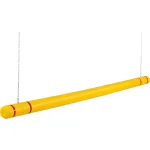
Clearance bars prevent damage and protect vehicles in industrial settings from entering an area that does now allow tall equipment. High density polyethylene construction provides long lasting durability. Some models feature an adjustable bar length and bright yellow finish for high visibility. Clearance bars are offered in a variety of sizes. Hardware kits are also available.
CompareImageLengthDiameterColorTape Color FamilyBrandModel #Price
Global Industrial™ Clearance Bar, 104" to 120" L, Yellow With Red Tape, HDPE
104" - 120" in
4 -1/2 in
Yellow
Red
Global Industrial
Ships Same Day
WB708405YR
as low as

$145.95

Save $10.00 (6%)
Global Industrial™ Clearance Bar, 104" - 120" L, Yellow with Black Tape, HDPE
104 to 120 in
4-1/2 in
Yellow
Black
Global Industrial
Ships Same Day
WB708405BK
as low as

$145.95

Save $10.00 (6%)
Global Industrial™ Clearance Bar, 80"L, Yellow with Red Tape, HDPE
80 in
4-1/2 in
Yellow
Red
Global Industrial
WBB3780929$99.95
Height Guard™ Clearance Bar, 7"D x 96"L, Yellow w/Red Tape, No Graphics, HTGRD796YRNG
96 in
7-5/16 in
Yellow
Red
Encore Commercial Products
WBB2060958as low as

$269.95

Save $10.00 (4%)
Encore Commercial Products Height Guard Clearance Bar with No Tape, 7" Dia. x 96"L, Yellow
96 in
7 in
Yellow
No Tape
Encore Commercial Products
WBB3190543$169.95
Innoplast Clearance Bar, 4"D x 96"L, Yellow Bar/White Tapes
96 in
4-15/16 in
Yellow
White
Innoplast
WBB3082206as low as

$105.95

Save $4.00 (4%)
Hardware Kit for Clearance Bar
-
-
Silver
No Tape
Innoplast
WB442998as low as

$17.25

Save $0.75 (4%)
Height Guard™ Clearance Bar, 7"D x 120"L, White w/No Tape, No Graphics, HTGRD7120WNTNG
120 in
7-5/16 in
White
No Tape
Encore Commercial Products
WBB2060830as low as

$275.95

Save $10.00 (3%)
Encore Commercial Products Height Guard Clearance Bar Chain Kit, 3"W x 36"L, Silver
36 in
-
Silver
No Tape
Encore Commercial Products
WBB3190544$28.95
Height Guard™ Clearance Bar, 7"D x 120"L, Yellow W/No Tape, No Graphics, HTGRD7120YNTNG
120 in
7-5/16 in
Yellow
No Tape
Encore Commercial Products
WBB2060910as low as

$275.95

Save $10.00 (3%)
Showing 1-10 of 21 results

Clearance Bars with Graphics

Clearance Bars with Graphics
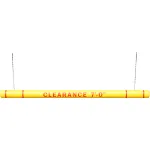
Clearance bars with graphics can provide important messages such as height measurements for added safety. The ultraviolet resistant and antistatic sleeve is durable and can withstand extreme temperatures. Clearance bars with graphics are available in many sizes.

Alarm Clearance Bars

Alarm Clearance Bars
Alarm Clearance Bars provide drivers with an effective visual and audible warning message to protect door frames, loading docks, infrastructure, and overhead walkways. Alarm bars can also be used to safeguard safety assets such as sprinkler systems, ventilation pipes, and more. These high-vis clearance bars feature an easy-to-install design and heavy-duty construction for long-lasting durability.
Clearance Bar Lettering Kits

Clearance Bar Lettering Kits

Showing 1-10 of 13 results

Clearance Bars for Overhead Height Awareness & Vehicle Access

Clearance bars provide a visible warning of height restrictions before vehicles or equipment reach low-clearance areas. Commonly installed at parking garages, loading docks, drive-through lanes, entrances, overhead structures, and other restricted-height areas, they help alert drivers and equipment operators before contact occurs.

Options include standard high-visibility clearance bars, models with reflective tape or graphics, and alarm clearance bars that provide additional visual or audible warnings. Choosing the right clearance bar depends on the available overhead clearance, installation location, visibility requirements, bar dimensions, and type of traffic approaching the restricted area.

What to Consider When Choosing a Clearance Bar

Consider the location, traffic, and warning requirements before selecting a clearance bar:

  • Available clearance: Determine the maximum safe vehicle or equipment height for the restricted area and establish the warning height accordingly.
  • Bar length: Select a length appropriate for the lane, doorway, entrance, or travel path where the bar will be suspended.
  • Visibility: High-visibility colors, contrasting reflective tape, and graphics can make height restrictions easier for approaching drivers and equipment operators to identify.
  • Warning message: Graphics or lettering can communicate the actual clearance height or another appropriate warning message.
  • Warning type: Standard clearance bars provide a physical and visual warning, while alarm models can add audible or visual alerts when activated.
  • Environment: Consider exposure to weather, sunlight, temperature changes, and other conditions when selecting materials and graphics for indoor or outdoor applications.
  • Installation location: Account for mounting points, suspension hardware, traffic direction, nearby structures, and other site-specific conditions.

Verify the manufacturer's installation instructions and product specifications before determining final placement.

Compare Clearance Bar Types

Different clearance bar configurations provide different levels of warning and customization.

Type Common Applications Key Considerations
Standard Clearance Bars Parking areas, loading docks, entrances, drive-through lanes, and overhead structures Bar length, diameter, visibility, reflective tape, and installation location
Clearance Bars with Graphics Areas where drivers need a visible height or warning message Displayed message, visibility, bar dimensions, and installation height
Alarm Clearance Bars Areas where an additional warning is beneficial before a vehicle reaches an overhead obstruction Alarm type, activation method, installation requirements, power requirements, and location
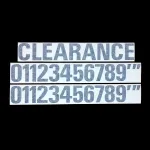
Lettering & Graphics Kits Existing compatible clearance bars requiring a height or warning message Bar compatibility, message, visibility, and installation requirements

The appropriate option depends on whether the application requires a basic visual indicator, a displayed clearance message, or an additional warning when contact occurs.

How Should Clearance Bar Height Be Determined?

A clearance bar should warn drivers before a vehicle or equipment reaches the actual overhead obstruction. Determining the appropriate warning height starts with identifying the lowest relevant overhead clearance along the route and the maximum safe height permitted through the restricted area.

The bar's installed height should reflect the site's actual conditions and intended warning function. Factors such as pavement slope, ramps, changes in elevation, vehicle approach, suspended equipment, and other site conditions can affect clearance.

Do not rely solely on a nominal or previously posted clearance measurement when installing or replacing a clearance bar. Verify the actual site conditions and follow applicable facility requirements and manufacturer installation instructions.

Where Are Clearance Bars Used?

Clearance bars are useful anywhere drivers or equipment operators need advance warning of restricted overhead space.

Common applications include:

  • Parking garage entrances and exits
  • Loading docks and dock doors
  • Warehouse entrances
  • Drive-through lanes
  • Covered parking areas
  • Service and maintenance entrances
  • Low-clearance passageways
  • Areas with overhead pipes, structures, or equipment

Positioning the warning before the restricted area gives the operator an opportunity to stop or redirect before reaching the obstruction.

Clearance Bars vs. Height Clearance Signs

Clearance bars and height clearance signs communicate similar information but serve different functions.

A height clearance sign visually communicates a posted height restriction. A clearance bar creates a suspended warning point before the restricted area and can provide a more immediate indication that an approaching vehicle may be too tall.

In some applications, using a clearance bar with graphics or lettering combines both functions by providing a suspended warning along with a visible clearance message. The appropriate setup depends on the facility, traffic pattern, visibility requirements, and applicable requirements for the location.

Why Visibility Matters

Clearance warnings need to be recognizable early enough for drivers and equipment operators to respond. High-visibility bar colors, contrasting reflective tape, and clearly displayed graphics can improve recognition in busy traffic areas or changing light conditions.

Visibility should be considered together with placement. Even a highly visible bar may provide inadequate warning if it is obscured, positioned too close to the restricted structure, or installed where approaching drivers have limited sight distance.

Frequently Asked Questions

Have a Question? Our experts might already have the answers.

What is a clearance bar used for?

A clearance bar provides advance warning of a height restriction before vehicles or equipment reach a low-clearance area. They are commonly used at parking garages, loading docks, drive-through lanes, warehouse entrances, and other locations with overhead restrictions.

Where should a clearance bar be installed?

A clearance bar is typically suspended before the restricted-height area so drivers or equipment operators have an opportunity to stop or redirect. Placement should account for the actual overhead clearance, approach path, visibility, site conditions, and applicable requirements.

How high should a clearance bar be installed?

The installation height should be based on the maximum safe clearance for the restricted area and verified site conditions. Ramps, slopes, changes in elevation, and other conditions can affect clearance, so the actual location should be evaluated before installation.

What is the difference between a clearance bar and a height clearance sign?

A height clearance sign displays the permitted height, while a clearance bar creates a suspended warning point before the overhead restriction. Clearance bars with graphics can combine a physical warning with a displayed clearance message.

What are clearance bars with graphics?

Clearance bars with graphics display information such as a height measurement or warning message directly on the bar, helping approaching drivers identify the restriction before entering the low-clearance area.

What is an alarm clearance bar?

An alarm clearance bar adds an audible, visual, or combined warning when activated, depending on the model. It can provide an additional alert before a vehicle reaches a door frame, overhead structure, walkway, pipe, or other restricted-height area.

Are clearance bars used at loading docks?

Yes. Clearance bars can be installed at loading docks and dock entrances to warn drivers of overhead height restrictions and help protect door frames, structures, and overhead equipment from contact with vehicles that are too tall.

Can clearance bars be used outdoors?

Some clearance bars are designed for outdoor applications, but suitability depends on the individual product. Review the manufacturer's specifications for material, UV resistance, temperature range, mounting requirements, and intended environment.