

Shredder Bins
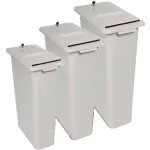
Shred Consoles and Bins

| Compare | Image | Bin Capacity Gallons | Color | Depth | Height | Width | Model # | Price | |
|---|---|---|---|---|---|---|---|---|---|
 | 20 gal | Gray | 20 in | 27 in | 11 in | WBB2263771 | $219.95 | ||
| 23 gal | Gray | 20 in | 30 in | 11 in | WBB2263770 | $219.95 | ||
 | 30 gal | Gray | 15-3/4 in | 36 in | 20 in | WBB2263756 | $605.00 | ||
 | 95 gal | Gray | 44 in | 30 in | 24 in | WBB2263767 | $585.00 | ||
| 16 gal | Gray | 20 in | 24 in | 11 in | WBB2263772 | $219.95 | ||
| 20 gal | Gray | 15-3/4 in | 24 in | 20 in | WBB2263757 | $595.00 | ||
 | 32 gal | Gray | 37 in | 19 in | 21 in | WBB2263769 | $545.00 | ||
 | 9 gal | Gray | 17-3/4 in | 13-1/8 in | 11-7/8 in | WBB2263764 | $419.95 | ||
 | 65 gal | Gray | 42 in | 23 in | 29 in | WBB2263768 | $565.00 | ||
 | 175 gal | Gray | 30-1/2 in | 48 in | 47-3/4 in | WBB2263766 | $1,499.00 |
Related Products
HSM® Shredder Oil, 16oz Pint Bottles, 12/Case. Shredder oil is designed for use with HSM paper shredders.The lubricant facilitates quick, easy shredding.It prolongs the life of your shredder and slows cutting head wear. Narrowed tip allows easy application.
Convenient bags keep work areas clean. Includes easy-to-use dispenser box with extra-long wire ties. For use with Fellowes® commercial shredders C-420, C-420C, C-480, and C-480C. 50 bags per box. 100% recyclable.
Powershred® High Security Performance Oil maximizes performance and extends shredder life. For High Security and High Capacity shredders. 12 oz. plastic squeeze bottle with extended nozzle ensures complete coverage.
COMMERCIAL SHREDDERS Shredder Oil & Lubricant Shredder oil conditions cutters to extend the life of your shredder. 4 oz. plastic squeeze bottle with extended nozzle ensures complete coverage. Oil shredder each time wastebasket is emptied or a minimum of twice a month. Sold in package quantities of 12, priced each.
Powershred® High Security Performance Oil maximizes performance and extends shredder life. For High Security and High Capacity shredders with an automatic oiling system. 32 oz. plastic bottle with twist-off top.
How to Choose the Right Shredder Bin for Secure Document Disposal
Protecting confidential information requires more than simply disposing of paper waste. Shredder bins provide a secure collection point for sensitive documents before they are destroyed, helping organizations reduce the risk of unauthorized access to confidential information and improve document disposal processes.
Designed for offices, healthcare facilities, financial institutions, government buildings, and other organizations that handle sensitive records, shredder bins provide a convenient way to collect documents securely throughout the workplace. Choosing the right shredder bin depends on document volume, placement location, security requirements, and facility workflow.
What Is a Shredder Bin?
A shredder bin is a secure document collection container designed to hold confidential papers before they are shredded or processed through a document destruction program. Unlike standard recycling bins or waste containers, shredder bins are designed to restrict access and help protect sensitive information during collection.
Many shredder bins feature locking lids, narrow document openings, and durable construction to help prevent unauthorized removal of documents before disposal.
How Do Shredder Bins Work?
Shredder bins provide a designated location where employees can discard confidential documents without placing them into regular trash or recycling containers.
The typical process includes:
- Employees place confidential documents into the secure opening of the shredder bin.
- The locked container stores documents until scheduled collection or shredding.
- Authorized personnel remove the collected documents for secure destruction.
This process helps organizations establish consistent document disposal procedures and reduce the risk of confidential information being improperly discarded.
Types of Shredder Bins
Office Shredder Bins
Office shredder bins are designed for everyday document collection in workplaces where employees regularly handle confidential paperwork.
Common features include:- Compact designs for offices and workstations
- Locking access panels or lids
- Easy placement in common areas
- Professional appearance suitable for office environments
Console Shredder Bins
Console-style shredder bins provide a larger-capacity solution for high-volume document collection. They are commonly used in reception areas, administrative departments, and shared office spaces.
Common features include:- Higher document capacity
- Secure collection compartments
- Freestanding designs
- Improved visibility and accessibility
Mobile Shredder Bins
Mobile shredder bins include wheels or casters for easier movement throughout a facility. These are useful for organizations that collect documents from multiple departments or locations.
Common features include:- Easy transportation between work areas
- Larger collection capacity
- Flexible placement options
- Reduced manual handling during collection
How to Choose the Right Shredder Bin
Determine Placement Location
Shredder bins should be placed where confidential documents are commonly generated while remaining convenient for employees.
Common locations include:- Offices
- Reception areas
- Human resources departments
- Accounting departments
- Healthcare administrative areas
- Copy rooms
- Employee workspaces
Evaluate Security Features
Security features are important when handling confidential information.
Consider:- Locking lids or access doors
- Restricted openings
- Durable construction
- Tamper-resistant designs
These features help limit access to documents before destruction.
Consider Document Volume
The amount of confidential paperwork generated determines the appropriate container size.
- Smaller offices may only need compact shredder bins for occasional document disposal.
- Large organizations with frequent document turnover may require higher-capacity containers.
Consider Mobility Requirements
Facilities with multiple collection points may benefit from mobile shredder bins that can be moved between departments or centralized collection areas.
Benefits of Using Shredder Bins
Shredder bins help organizations:
- Protect confidential information
- Improve document disposal procedures
- Reduce the risk of improper paper disposal
- Support workplace security practices
- Create consistent collection processes
- Keep sensitive documents separate from regular waste streams
Industries That Use Shredder Bins
Shredder bins are commonly used in:
- Corporate offices
- Healthcare facilities
- Financial institutions
- Law offices
- Government buildings
- Schools and universities
- Insurance companies
- Human resources departments
- Administrative offices
- Any organization handling confidential records
Frequently Asked Questions
Have a Question? Our experts might already have the answers.
What is the purpose of a shredder bin?
A shredder bin provides a secure location for collecting confidential documents before they are shredded or destroyed. It helps organizations separate sensitive paperwork from regular waste and supports secure document disposal procedures.
How is a shredder bin different from a regular recycling bin?
A shredder bin is designed specifically for collecting confidential documents and typically includes security features such as restricted openings or locking mechanisms. Regular recycling bins are intended for general recyclable materials and do not provide the same level of document protection.
What types of documents should go into a shredder bin?
Shredder bins are commonly used for documents containing confidential or sensitive information, including business records, employee information, financial documents, customer records, and other paperwork that should not be disposed of through regular waste streams.
Where should shredder bins be placed?
Shredder bins should be placed in areas where confidential documents are frequently handled, such as offices, copy rooms, administrative departments, reception areas, and employee workspaces.
What size shredder bin do I need?
The right size depends on document volume, the number of employees using the container, collection frequency, and available space. Smaller containers are suitable for low-volume areas, while larger bins are better for organizations with higher document disposal needs.
How often should shredder bins be emptied?
The frequency depends on document volume and facility procedures. High-volume locations may require more frequent collection, while smaller offices may need less frequent servicing.