

Delineator Posts
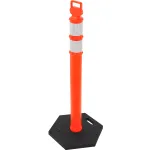
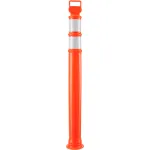
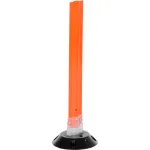
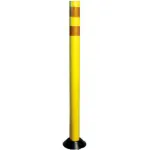

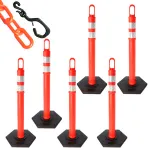

Delineator Posts with Bases
| Compare | Image | Height | Color | Number of Reflective Stripes | Sheeting | Material | Brand | Model # | Price | |
|---|---|---|---|---|---|---|---|---|---|---|
 | 49 in | 2 | High Intensity Grade | Polyethylene | Global Industrial | Ships Same Day WB670682 | as low as $30.95 Save $2.00 (6%) | |||
 | 49 in | 2 | High Intensity Grade | Polyethylene | Global Industrial | Ships Same Day WB670683 | $28.95 | |||
 | 45 in | Orange | 2 | High Intensity Grade | Polyethylene | Global Industrial | Ships Same Day WB670749 | as low as $85.95 Save $7.00 (8%) | ||
 | 42 in | Orange | 2 | High Intensity Grade | Polyethylene, Rubber | Vizcon Traffix Devices | WBB3160309 | as low as $24.95 Save $2.00 (7%) | ||
 | 42 in | Orange | 2 | High Intensity Grade | Polyethylene, Rubber | Vizcon Traffix Devices | WBB3160313 | as low as $28.95 Save $2.00 (6%) | ||
 | 47-1/2 in | 2 | High Intensity Grade | Rubber/Low Density Polyethylene | Mr. Chain | WBB3217566 | $299.95 | |||
 | 42 in | Orange | 2 | High Intensity Grade | Polyethylene | Cortina Safety | Ships Same Day WBB2051546 | as low as $61.95 Save $5.00 (7%) | ||
 | 42 in | Orange | 2 | High Intensity Grade | Polyethylene, Rubber | Vizcon Traffix Devices | WBB3160315 | as low as $45.95 Save $3.00 (6%) |

Delineator Posts

Flexible Guide Posts & Stakes

Channelizer Posts

Channelizer Cones

Channelizer Bases

Delineator Bases

Channelizer Vertical Panels

Post Accessories

Delineator Post & Chain Kits
Related Products
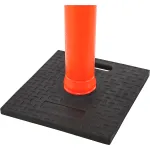
✓ Anti-corrosive and durable ✓ Nestable base for more compact storage ✓ Colors help you to customize your zones Designate walkways around hospitals, schools, and warehouses with the portable Global Industrial™ Reflective Delineator Post with Square Base. Finished with 3" reflective strips, these posts are highly visible and ideal for use in parking areas and various work zones. The snug-fitting base allows for multiples delineators to be nested when not in use, making them easy to store. 1-Year Limited Warranty.
✓ For permanent barrier rail installation ✓ Set bolt secures rail to base ✓ Make straight runs or curves up to 30° Designed to be used on compatible pedestrian barriers with 1-5/8" legs, the Global Industrial™ Single-Socket Base is made of durable steel and has four pre-drilled holes to floor mount the barrier for permanent installation. A simple set bolt secures the barrier leg into the base and is used to make straight runs or curves up to 30°, depending on specific needs. Mounting anchors & bolts not included.
The 90 degree corner base connector is made of nylon and is used with a Quick Frame profile which has built-in ridges that bite into the fastener to create tension without the use of hardware. It is convenient for projects that will be attached or mounted at a 90 degree angle to any flat surface or T-slot profile and it also provides a corner connection. The 90 degree corner base connector attaches profiles quickly and easily using only a soft-faced mallet to form light-duty yet sturdy builds.
The Pyramid Sign Base is made of durable LDPE plastic resulting in a maintenance free, lightweight yet durable system. This portable sign base option is best suited for drive-thrus, parking lots, crosswalks, specialized parking spot and anywhere else that requires temporary or permanent signage. Base dimensions are 22"H x 22"W x 22"D and sign post is 98"H. Easy installation, can fill with recommended 100 lbs. of sand or gravel, or fill with 19 gallons of water. In freeze areas fill sign base with 16 gallons of water to allow expansion.
Highly visible Traffic Looper Tube Delineator Post with Reflective Collar and a 18-pound recycled rubber base. Overall height, including post and Looper handle, is 47-1/2-Inches, post is 4-Inches in diameter. Extra-large flange is 6-1/2-Inches at the bottom of the post and allows the rubber base to hold the post firmly in place. Use to guide traffic in construction zones, airports, parking lots, job sites, anywhere people and property need be kept out of harm's way.
Delineator Posts for Traffic Control & Guidance
Delineator posts are highly visible traffic-control devices used to guide vehicles and pedestrians, define travel paths, identify restricted areas, and separate traffic from work or pedestrian zones. They are commonly used in parking lots, construction areas, roadwork zones, warehouses, facility grounds, entrances, and other areas where a clear visual boundary is needed.
Delineator posts are available in portable, flexible, fixed-base, reflective, and channelizing designs. Choosing the right type depends on whether the setup is temporary or permanent, where the posts will be used, visibility requirements, traffic conditions, and whether the posts need to be connected to form a continuous boundary.
What to Consider When Choosing Delineator Posts
Consider how and where the posts will be used before selecting a design.
- Temporary vs. fixed use: Portable posts with weighted bases can be repositioned as traffic patterns change, while surface-mounted posts are better suited to locations requiring a more permanent installation.
- Visibility: Bright colors and reflective bands or sheeting can make posts easier to identify. Reflective features are particularly important where visibility is needed at night or in low-light conditions.
- Flexibility: Flexible guide posts are designed to bend or deflect when contacted, making them useful in areas where occasional vehicle contact may occur.
- Base design: Weighted and portable bases provide stability without permanent mounting, while fixed posts may require anchoring to a compatible surface.
- Height: Consider surrounding vehicles, equipment, sight lines, and the distance from which the post needs to be visible.
- Traffic conditions: Vehicle speed, traffic volume, pedestrian activity, and the surrounding environment can affect the appropriate type of channelizing device.
- Accessories: Chains, belts, signs, and other compatible accessories can connect posts or communicate additional instructions.
Types of Delineator & Channelizer Posts
Different designs provide different levels of portability, flexibility, visibility, and traffic guidance.
| Type | Common Uses | Key Consideration |
|---|---|---|
| Delineator Posts with Bases | Parking lots, facilities, temporary lanes, restricted areas | Portable bases allow posts to be moved as conditions change |
| Flexible Guide Posts | Traffic lanes, parking areas, entrances, medians, facility grounds | Flexible construction can allow the post to deflect after contact |
| Channelizer Posts | Work zones, temporary traffic patterns, lane guidance | Designed to provide a highly visible path for approaching traffic |
| Channelizer Cones | Temporary work areas, parking lots, traffic guidance | Combine a tall channelizing profile with a portable base |
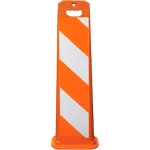
| Vertical Panels | Work zones, lane transitions, changing traffic patterns | Larger vertical marking area provides additional visual guidance |
| Post & Chain Systems | Pedestrian areas, restricted zones, queues, facility access | Connected posts create a more continuous visual boundary |
Delineator Posts vs. Traffic Cones
Delineator posts and traffic cones can both guide traffic and identify temporary boundaries, but their designs make them useful for different situations.
| Feature | Delineator Posts | Traffic Cones |
|---|---|---|
| Shape | Tall, narrow vertical post | Tapered cone with a wide base |
| Common Use | Defining lanes, routes, boundaries, and restricted areas | Marking hazards, work areas, temporary traffic changes, and restricted areas |
| Installation | Available with portable bases or fixed mounting | Typically freestanding and portable |
| Connecting Multiple Units | Many designs accept chains or other barrier accessories | Compatible models can use cone bars, chains, or retractable belts |
| Flexibility | Flexible models can bend or deflect when contacted | Flexible construction varies by cone design |
| Best Choice When | A clearly defined vertical path or boundary is needed | Fast deployment and easy repositioning are priorities |
Neither device is automatically better. Traffic cones are practical when a temporary marker needs to be deployed and moved quickly. Delineator posts can be a better choice when a taller, narrower marker or a more continuous visual route is needed.
Delineator Posts vs. Bollards
Delineator posts and bollards should not be treated as interchangeable.
Delineator posts primarily provide visual guidance and channelization. They help drivers and pedestrians recognize lanes, boundaries, hazards, or restricted areas.
Bollards can serve different purposes depending on their construction and installation, including traffic guidance, access control, and protection of buildings or equipment. A delineator post should not be assumed to provide impact protection simply because it creates a visible boundary.
When physical vehicle protection is required, select a product specifically designed and rated for that purpose.
Choosing Delineator Posts by Application
Different environments may require different post designs and features.
- Parking lots and garages: Use delineators to define vehicle routes, restricted areas, entrances, exits, and temporary traffic patterns.
- Warehouses and industrial facilities: Posts can identify pedestrian routes, equipment zones, restricted areas, and temporary work boundaries.
- Construction and maintenance areas: Portable delineators and channelizers can help guide vehicles and pedestrians around changing work areas.
- Roadwork and traffic-control zones: Channelizing devices can help define travel paths and guide drivers through temporary traffic patterns when the devices and setup meet applicable requirements.
- Entrances and access points: Delineator posts can make lane boundaries, access restrictions, and directional paths more visible.
- Pedestrian areas: Posts connected with chains or compatible barriers can create a clearly defined temporary boundary or route.
Delineator Post Bases & Accessories
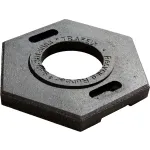
The base affects both the stability and portability of a delineator post. Weighted bases can support temporary installations while allowing posts to be repositioned or removed. Other delineator designs may be mounted directly to a compatible surface for longer-term use.
Post-and-chain systems connect multiple posts to create a continuous visual boundary. Depending on the post design, other accessories may include replacement bases, reflective components, signs, mounting hardware, and connectors.
Check compatibility between the post, base, and accessory before combining components from different systems.
Frequently Asked Questions
Have a Question? Our experts might already have the answers.
What are delineator posts used for?
Delineator posts are used to guide vehicles and pedestrians, define travel paths, identify restricted areas, and separate traffic from work or pedestrian zones. Common applications include parking lots, construction areas, roadwork, warehouses, entrances, and facility grounds.
What is the difference between a delineator post and a traffic cone?
Delineator posts have a tall, narrow profile and are useful for defining lanes, routes, and boundaries. Traffic cones have a wider tapered base and are commonly used for quickly marking hazards, work areas, and temporary traffic changes. Both are available in portable designs.
What is a channelizer post?
A channelizer post is a highly visible vertical traffic-control device used to guide vehicles through a defined path or around a work area. Channelizer posts are commonly used for temporary lane guidance, work zones, parking areas, and changing traffic patterns.
What is the difference between a delineator post and a bollard?
A delineator post primarily provides visual guidance or channelization. Bollards may be used for traffic guidance, access control, or physical protection depending on their design and installation. Delineator posts should not be assumed to provide vehicle impact protection.
What are flexible delineator posts used for?
Flexible delineator posts are useful in locations where a visible traffic marker may experience occasional vehicle contact. Depending on the design, the post can bend or deflect when contacted rather than functioning as a rigid barrier.
Are delineator posts reflective?
Many delineator posts are available with reflective bands or sheeting to increase visibility when illuminated by vehicle headlights or other light sources. Reflective features can be especially useful for nighttime and low-light applications.
Can delineator posts be used in parking lots?
Yes. Delineator posts can define traffic lanes, entrances, exits, restricted areas, pedestrian routes, and temporary traffic patterns in parking lots and garages.
Can delineator posts be used in warehouses?
Yes. Delineator posts can identify pedestrian routes, equipment zones, restricted areas, temporary work zones, and other boundaries in warehouses and industrial facilities.
Can delineator posts be connected with chains?
Yes. Compatible delineator posts can be connected with chains or other barrier accessories to create a more continuous visual boundary. Post-and-chain systems are commonly used around pedestrian areas, restricted zones, queues, and temporary work areas.
How do I choose a delineator post?
Consider whether the installation is temporary or fixed, required visibility, flexibility, post height, base design, traffic conditions, and compatible accessories. For roadway applications, also verify that the device and setup meet applicable traffic-control requirements.